Showing posts with label Pre Columbus. Show all posts

Monday, August 19, 2024

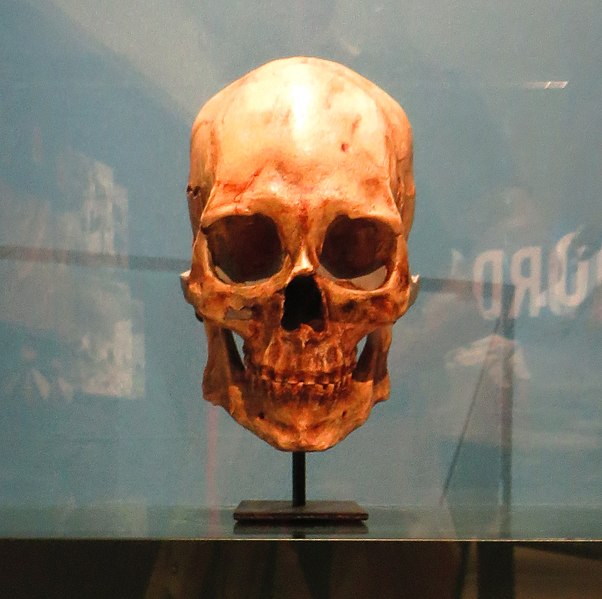
Kennewick Man: Who Is Right?

Today we will explore the story of Kennewick Man. As you explore the topic keep in mind the following questions:

  • How did this story evolve over time?
  • What eventually happened to Kennewick Man?
  • What should have been done with the remains?
  • What would you want to have done with the remains if they were your ancestor?
  • According to the map below, what indigenous people group use to live here in southwest Missouri? 
  • What should you do if you find the remains of an indigenous person?

Essential Question: Should scientists be allowed to study the remains of indigenous peoples?

Engage: What would you think if a scientist dug up the remains of an ancestor to study?


  • On occasion, archaeologists have dug up the remains of ancient Native Americans.
  • Should scientists be allowed to study these remains?
  • Native Americans feel such remains should be immediately reburied according to Native
        American customs.
  • Scientists worry that if reburied, the remains will deteriorate and lose their value
        for present and future scientific study.

Explore: 

Wednesday, October 11, 2023

Engineering an Empire: The Aztecs


EQ: What happened to the buildings the Aztechs created?

 Engage:

  • Beginning of the lessons on Mexico

Explore:

  • Lost Temple of the Aztecs (1:30) Disney+ 

Explain:

  • How was Tenotichlan created?
  • What happened to Tenotichlan?
  • What kind of pyramid did the Aztech's create?

Wednesday, August 30, 2023

The Silk Road and World Trade

 Map of the Silk Trade Route

https://commons.wikimedia.org/wiki/File:Silk_route.jpg

Marco Polo's Route

https://en.wikipedia.org/wiki/File:Travels_of_Marco_Polo.svg

Voyages of Zheng He

https://commons.wikimedia.org/wiki/File:Zheng_He.png


The trade routes that we collectively refer to as the Silk Road started as far back as 2,200 years ago. Although the types of trade goods were varied, it is called the Silk Road because of the demand created for silk from China. 

While we may tend to emphasize the economic implications of these trade routes including cities created as stopping points that became wealthy, a much more important trade was taking place throughout this period, the trade of culture. Languages, mathematics, literacy and religion were all shared throughout large areas of the world because of these trade routes. 

Essential Question: What led to the rediscovery of the Americas and its colonization?

Engage: 

  • We know that Columbus 'rediscovered' the Americas, but what events led to the need for this exploration?
Explore:

Explain:

  • Why did I include the time stamp for the questions on the video questions?
  • What can you tell from the time stamps?
  • How can you use this information to inform how you approach questions over audio/videos?
  • How did trade drive the sharing of culture?
  • Why did Columbus look west for a route to India?

Evaluate:

Expectations: 

  • During class instruction/work time you will follow all directions.
  • Stay seated and do not talk while taking the vocabulary assessment.
  • While working you may talk quietly and go to supply table for supplies.
  • The Int'l Commerce #18 Worksheet will be due Tuesday, September 5. You will receive half credit after that date.
  • When finished place the worksheet in the tray.

Tuesday, August 29, 2023

The First American Immigrants

https://en.wikipedia.org/wiki/File:Glyptodon_old_drawing.jpg

The history of the Americas started well before Columbus. Unfortunately, because of the lack of or destruction of written histories, archaeologists have to rely on the discovery of artifacts to further our knowledge of these peoples. In this lesson we will learn about different theories of migration and also discover that this area is constantly changing and updating do to new discoveries. 

Essential Question: Where and when did the first immigrants to the Americas arrive?
Engage:
  • Review the Kenniwick Man lesson
Explore:
Explain:
  • How did the first immigrants come to the Americas?
  • When did the first immigrants come to the Americas?
Evaluate: 
Extend:

Expectations: 

  • During class instruction/work time you will follow all directions.
  • Stay seated and do not talk while taking the vocabulary assessment.
  • While working you may talk quietly and go to supply table for supplies.
  • The First American Immigrants Worksheet will be due Thursday, August 31. You will receive half credit after that date.
  • When finished place the worksheet in the tray.

Thursday, August 27, 2020

Kennewick Man: Which Right is Right?

Essential Question: Should scientists be allowed to study the remains of indigenous peoples?

Engage: What would you think if a scientist dug up the remains of an ancestor to study?

        own words as well as draw a picture of what that word means to them.
  • On occasion, archaeologists have dug up the remains of ancient Native Americans.
  • Should scientists be allowed to study these remains?
  • Native Americans feel such remains should be immediately reburied according to Native
        American customs.
  • Scientists worry that if reburied, the remains will deteriorate and lose their value
        for present and future scientific study.

Explore: 

Elaborate: 

Evaluate:

  • How did this story evolve over time?
  • What eventually happened to Kennewick Man?
  • What should have been done with the remains?
  • What would you want to have done with the remains if they were your ancestor?
  • According to the map below, what indigenous people group use to live here in southwest Missouri? 
  • What should you do if you find the remains of an indigenous person?

    https://commons.wikimedia.org/wiki/File:Early_Localization_Native_Americans_USA.jpg