Showing posts with label history. Show all posts

Friday, September 01, 2023

Conquest of the Americas: The Southwest

https://commons.wikimedia.org/wiki/File:Coronado-Remington.jpg

Francisco Coronado heard a story about the Cities of Cibola, the Seven Cities of Gold, from a friar named Estevan. He decided he would mount an expedition to find these cities. What did Coronado plan to do when he found these cities? Did he eventually find them? What controversy surrounds the expedition?

Essential Question:   Why did Coronado explore the southwest part of North America?

Engage:

  • Vocabulary
  • Students will define the vocabulary word using their own words on worksheet

Explore:

Explain:

  • Was Coronado suitably punished for his role in the death of the 'Turk'?
  • Do you think Coronado was a hero or villain? 

Evaluate

Extend:

 Expectations: 

  • During class instruction/work time you will follow all directions.
  • Stay seated and do not talk while taking the vocabulary assessment.
  • While working you may talk quietly and go to supply table for supplies.
  • The worksheet will be due Thursday, September 7. You will receive half credit after that date.
  • When finished place the worksheet in the tray.

Tuesday, August 29, 2023

The First American Immigrants

https://en.wikipedia.org/wiki/File:Glyptodon_old_drawing.jpg

The history of the Americas started well before Columbus. Unfortunately, because of the lack of or destruction of written histories, archaeologists have to rely on the discovery of artifacts to further our knowledge of these peoples. In this lesson we will learn about different theories of migration and also discover that this area is constantly changing and updating do to new discoveries. 

Essential Question: Where and when did the first immigrants to the Americas arrive?
Engage:
  • Review the Kenniwick Man lesson
Explore:
Explain:
  • How did the first immigrants come to the Americas?
  • When did the first immigrants come to the Americas?
Evaluate: 
Extend:

Expectations: 

  • During class instruction/work time you will follow all directions.
  • Stay seated and do not talk while taking the vocabulary assessment.
  • While working you may talk quietly and go to supply table for supplies.
  • The First American Immigrants Worksheet will be due Thursday, August 31. You will receive half credit after that date.
  • When finished place the worksheet in the tray.

Thursday, September 10, 2020

Conquest of the Americas: The Southwest


https://commons.wikimedia.org/wiki/File:Coronado-Remington.jpg

Francisco Coronado heard a story about the Cities of Cibola, the Seven Cities of Gold, from a friar named Estevan. He decided he would mount an expedition to find these cities. What did Coronado plan to do when he found these cities? Did he eventually find them? What controversy surrounds the expedition?

Essential Question:   Why did Coronado explore the southwest part of North America?

Engage:

  • Vocabulary 
  • Students will define the vocabulary word using their own words on worksheet

Explore:

Explain:

  • Was Coronado suitably punished for his role in the death of the 'Turk'?
  • Do you think Coronado was a hero or villain? 

Evaluate

Extend:


Tuesday, September 08, 2020

The Silk Road and World Trade: What Led to the Rediscovery of the Americas?

 Assessment Time

Map of the Silk Trade Route

https://commons.wikimedia.org/wiki/File:Silk_route.jpg

Marco Polo's Route

https://en.wikipedia.org/wiki/File:Travels_of_Marco_Polo.svg

Voyages of Zheng He

https://commons.wikimedia.org/wiki/File:Zheng_He.png


The trade routes that we collectively refer to as the Silk Road started as far back as 2,200 years ago. Although the types of trade goods were varied, it is called the Silk Road because of the demand created for silk from China. 

While we may tend to emphasize the economic implications of these trade routes including cities created as stopping points that became wealthy, a much more important trade was taking place throughout this period, the trade of culture. Languages, mathematics, literacy and religion were all shared throughout large areas of the world because of these trade routes. 

Essential Question: What led to the rediscovery of the Americas and its colonization?

Engage: 

  • We know that Columbus 'rediscovered' the Americas, but what events led to the need for this exploration?

Explore:

Explain:

  • Why did I include the time stamp for the questions on the video questions?
  • What can you tell from the time stamps?
  • How can you use this information to inform how you approach questions over audio/videos?
  • How did trade drive the sharing of culture?
  • Why did Columbus look west for a route to India?

Evaluate:

Thursday, September 03, 2020

The First Immigrants

https://en.wikipedia.org/wiki/File:Glyptodon_old_drawing.jpg

The history of the Americas started well before Columbus. Unfortunately, because of the lack of or destruction of written histories, archaeologists have to rely on the discovery of artifacts to further our knowledge of these peoples. In this lesson we will learn about different theories of migration and also discover that this area is constantly changing and updating do to new discoveries. 

Essential Question: Where and when did the first immigrants to the Americas arrive?
Engage:
  • Review the Kenniwick Man lesson
Explore:
Explain:
  • How did the first immigrants come to the Americas?
  • When did the first immigrants come to the Americas?
Evaluate: 
Extend:

Monday, August 24, 2020

The Mystery of Skippy's Tombstone


Photo by Me

This is a tombstone that resides in my yard. It has been there as long as I can remember (45+ years). Today we will be looking at this artifact and try to learn as much as we can about it.

Your assignment is to come up with 20 questions that I will be able to answer with a yes or a no. I will then answer 20 of these questions for you. You will then write down everything you know about this artifact. 

I will finish by telling you all I know about this artifact, and some of the conclusions I have drawn about it. Will what you write match my story?

TSW examine an artifact and create appropriate questions to ask to learn more information about that artifact


Essential Question:

  • Why are historical artifacts important to us? (5 minutes)

Engage: 

  • Having a tombstone in class should be pretty engaging.  (Ordinarily I would bring in the tombstone, but with all of the Covid concerns we will just be using the picture)

Explore:

  • The students will examine a tombstone that I brought in to class. (5 minutes)
  • They will create questions to ask me about the tombstone that can be answered as yes/no. (5 minutes)

Explain:

  • I will explain what I know about the tombstone as well as what I do not know. (5 minutes)

Evaluate: 

Thursday, January 16, 2020

Walt and El Groupo


EQ:
  • Why did Walt Disney take a group of animators to South America during World War 2?
Engage:
Explore:
  • Walt and El Grupo documentary
  • Selections from Saludos Amigos and The Three Caballeros
Explain:
  • Why was the Disney company reeling before the trip?
  • Why did the US Government pay for Disney's trip?
  • How did the trip to South America influence Disney's work and the work of his artists?
Evaluate:
  • How does Education for Death inform what you saw in Walt and El Grupo? 
Extend:


Tuesday, September 17, 2019

The Conquistador Emoji Project

Imagine your shock when arrive at your destination, the city you plan to conquer only to realize that is the cleanest, most beautiful city you or any of your fellow conquistadors have ever experienced. 

You arrived from one of the most powerful nations on earth, having sailed from one of the largest and most prosperous cities in Europe, only to find that it pales in comparison to the city you thought would be primitive, not unlike the people you plan to enslave. 

How would you feel?
After reading the article on Common-Place.org, put yourself in the place of a Spanish conquistador seeing Tenotichlan for the first time. You will write about your experience, but not using words.


The pictures above are Aztec script symbols. They use the symbols to share their information. We do something similar with emojis. If using symbols to tell a story was good enough for the Aztecs, it is certainly good enough for you. 

Your assignment is to write your story using emojis not words as a conquistador first entering Tenochtitlan. 

Essential Question:
  • How did Tenochtitlan compare to European cities?
Engage:
Explore:

Explain:
  • What did the conquistadors see when they first entered Tenochtitlan?
  • What were the European cities like?
Evaluate:
  • Emoji Project Handout
  • Explain what the conquistadors saw when they first visited Tenochtitlan using emojis.
Extend:


Monday, September 16, 2019

Conquest of America: Southeast

https://commons.wikimedia.org/wiki/File:Flindians1723.JPG
St. Augustine is the oldest continuously inhabited European settlement in the continental borders of the US.  Why did the Spanish set up colonies in what is now Florida? What were they looking for and did they find it? Why did France later set up a colony and what happened to it? These are the questions we will be answering with this lesson.

Essential Question: What countries colonized the land that is now Florida?

Engage:
  • Can you name which countries colonized the Americas?
  • Anecdotes from my trip to St. Augustine over the summer. 
https://commons.wikimedia.org/wiki/File:Castillo_de_San_Marcos.jpg
Explore:
  • Conquest of America: Southeast video 
  • Vocabulary: colony, heretic, mutiny, Divine Right, sovereignty Think/Pair/Share Activity
Explain:
  • Why did France colonize Florida?
  • What are some good vocabulary learning practices?
Evaluate:
  • Vocabulary 
  • Discussion Questions Worksheet
Extend:


Friday, September 06, 2019

Conquest of America: Southwest

https://commons.wikimedia.org/wiki/File:Coronado-Remington.jpg
Francisco Coronado heard a story about the Cities of Cibola, the Seven Cities of Gold, from a friar named Estevan. He decided he would mount an expedition to find these cities. What did Coronado plan to do when he found these cities? Did he eventually find them? What controversy surrounds the expedition?

Essential Question:   Why did Coronado explore the southwest part of North America?

Engage:
  • What would you do to get rich?
Explore:
  • Conquest of America: Southwest video 
Explain:
  • Was Coronado suitably punished for his role in the death of the 'Turk'?
  • Do you think Coronado was a hero or villain? 
Evaluate:
  • Vocabulary 
  • Discussion Questions Worksheet
Extend:

Tuesday, August 20, 2019

Which Right is Right? Kennewick Man

Essential Question: 

  1. Should scientists be allowed to study the remains of indigenous peoples?

Engage: 

  • What would you think if a scientist dug up the remains of your ancestor?
  • On occasion, archaeologists have dug up the remains of ancient Native Americans. Should scientists be allowed to study these remains? Native Americans feel such remains should be immediately reburied according to Native American customs. Scientists worry that if reburied, the remains will deteriorate and lose their value for present and future scientific study.

Explore: 

  • Discover Magazine: The Earliest Immigrants video (25:02)

Elaborate: 

Evaluate:

  • How did this story evolve over time?
  • What eventually happened to Kennewick Man?
  • What should have been done with the remains?
  • What would you want to have done with the remains if they were your ancestor?
  • According to the map below, what indigenous people group use to live here in southwest Missouri? 
  • What should you do if you find the remains of an indigenous person?

https://commons.wikimedia.org/wiki/File:Early_Localization_Native_Americans_USA.jpg


Extension:

Friday, August 16, 2019

Does the Foot Soldier of Birmingham Statue have Historical Value?

https://en.wikipedia.org/wiki/Revisionist_History_(podcast)

In this lesson we are using the podcast The Foot Soldier by Malcolm Gladwell to discuss inherent bias.

https://en.wikipedia.org/wiki/File:Birmingham_campaign_dogs.jpg

In this lesson we will look at the above picture and try to decode it. What are we seeing happen here? Then we will listen to the podcast by Malcolm Gladwell. Is what we believe to have happened what actually happened?

After the lesson you will need to answer these questions:
  1. Can the art we create be used to influence belief systems? 
  2. As we examine the story as well as look at the statue and the picture from which the statue comes, what can we learn about ourselves and how we react based upon what we have learned?
  3. How will this change your view of historical artifacts as we move forward?

Essential Question: Does the Foot Soldier of Birmingham statue have historical value?

Engage:
Explore:
Explain: 
  • The statue is a misrepresentation of the facts. Does this matter as an art piece? 
Evaluate:
  • The students will question if the statue is a reliable historical source.
  • Does the Foot Soldier of Birmingham statue have historical value?
  • Can the art we create be used to influence belief systems? 
  • As we examine the story as well as look at the statue and the picture from which the statue comes, what can we learn about ourselves and how we react based upon what we have learned?
  • How will this change your view of historical artifacts as we move forward?

Wednesday, August 14, 2019

Artefact Historique: The Mystery of the Tombstone

Photo by Me
This is a tombstone that resides in my yard. It has been there as long as I can remember (45+ years). Today we will be looking at this artifact and try to learn as much as we can about it.

Your assignment is to come up with 20 questions that I will be able to answer with a yes or a no. I will then answer 20 of these questions for you. You will then write down everything you know about this artifact. 

I will finish by telling you all I know about this artifact, and some of the conclusions I have drawn about it. Will what you write match my story?

Sunday, January 06, 2019

Art History or Art as History?

Washington Crossing the Delaware is a very famous painting. Its use in popular culture probably even led to a contest to pick the best George Washington impersonator to re-enact the crossing every year. Watch this video to find out more about the contest. 


After watching the video, lets look at the paining. What do you see? Can you find any historical inconsistencies? You can find more information about the painting of Leutze's Washington Crossing the Delaware.

Emanuel Leutze "Washington Crossing the Delaware "
The painting creates a lot of questions. Why was this painted? Is it historically accurate? Who is the artist Emanuel Leutze? Check out the article below to find out these answers.

Assignment 

In the comment section of this post answer the following questions:

  1. In "Being George" why do you think portraying George Washington is so important to the contestants?
  2. Why did Leutze paint "Washington Crossing the Delaware"? 
  3. Identify three historical inaccuracies in the painting. 
  4. Should art be historically accurate? Explain why or why not. 

Copy and paste the following frame for your comment:
  1. Portraying George Washington is important to the contestants because
  2. Leutze painted "Washington Crossing the Delaware" because
  3. Three historical inaccuracies in the painting are
  4. Yes, art should be historically accurate because/No, art should not be historically accurate because 

Monday, April 10, 2017

Tuesday, April 04, 2017

Erie Canal, Manifest Destiny, and the Monroe Doctrine

Read Chapter 10 Sections 2-3 in the online textbook then watch the videos below.


Tuesday, March 28, 2017

Growth and Expansion Part 1

In this assignment we are going to look at two different historical time periods to find out how the industrial revolution positively and negatively effected women. As you watch the videos and scan the online information, you should reflect on what happened and why. You should also think about how they have influenced women (and men) in factory work today. Please note you will not finish this activity today, so don't even bother trying. 

1) Read Chapter 10 Section 1 in the online textbook.

2) Click the link to watch

Mill Time David Macaulay

3) Watch the video below


4) Here is the link to the

  Lowell Mill Girls Wikipedia Page

5) Click the link to watch

Triangle Shirtwaist Factory Fire

6) Here is the link to the

Triangle Shirtwaist Factory Fire Wikipedia Page

7) The Crime of Carelessness (1912), and Thomas A. Edison short inspired by the Triangle Factory fire.

Thursday, March 23, 2017

Pick an Event and Write About It

Today the lesson starts on Wikipedia's Timeline of United States History


1) Choose an even that took place between 1801 and 1815. Pick wisely, something that you are interested in. Take a few minutes to look through them before you choose.

2) After you have picked an event, find 5 good resource sites to learn about that event. You will need to identify these sites on your assignment.

3) On a Google Doc in your team drive, write a 300-500 word summary of your event. Answer the following questions in your summary:

a) What happened?
b) Why is this event important to United States history?
c) Why did you pick this particular event?

At the bottom of the document add links to the five sites you used as resources. Write the name of the site down, highlight it, then click on the chain button to add the web address. 

Wednesday, March 01, 2017

The United Kingdom


First we will start off with this Rick Steves video on the city of London. While we watch, fill out the GForm below. 


Let's have some fun today!

http://www.toporopa.eu/en/uk_countries_capitals.html

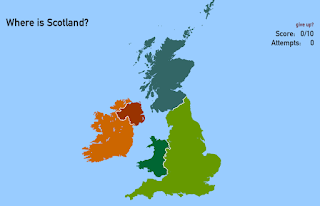
First let's play a game to help us identify the countries and capitols in the United Kingdom.


http://www.toporopa.eu/en/uk_mountains_waters.html

Next let's play a game to learn about some of United Kingdom's mountains, rivers and lakes.


After you finish the two geography games, check out these games about the history of the United Kingdom.


Tuesday, February 28, 2017

The Election of 1800


Scan the Wikipedia page on the election of 1800. Then answer the questions on this GForm. You will need this information to do the next activity. 

Listen to the song The Election of 1800 from the musical HamiltonHere are the lyrics to the song, follow along as you listen. 

How do you think Aaron Burr felt when he found out he lost the election because of Alexander Hamilton? Write a rap that explains how Burr may have responded. Use the instrumental track below. You may want to use the original lyrics as a guide.